Diagnosing Consumer Switching Dynamics in Pet Food

June 26, 2024

During 2023, widespread concern arose about — and some early data came to light regarding — indications that trading down was occurring in the pet food category. If so, it would mark the reversal of a yearslong trend. How extensive was this apparent shift, and what are the implications for pet food brands? To find out, L.E.K. Consulting surveyed 1,600 dog and cat owners. Here’s what we discovered. 

Consumer profiles

Based on our survey, roughly 1 in 3 pet owners tried a different pet food brand in 2023. One in 7 (15% of all pet owners) traded down, achieving an average discount of about 9%. Meanwhile, closer to 1 in 8 (13%) traded up at an average premium of roughly 7% (see Figure 1).

Image
Pet food brand-switching among dog and cat owners
Image
Pet food brand-switching among dog and cat owners

Pet owners who switched brands were, on average, younger than other pet owners. Those trading down were six years younger than average, and those trading up to more premium brands were two years younger. Brand-switchers were also newer to pet ownership, suggesting that switching is more common in the first few years of pet ownership.

A key difference between those who traded up and everyone else was income. The average annual household income of pet owners trading up was nearly $15,000 higher than those trading down and $12,000 higher than the average pet owner (see Figure 2).

Image
Demographics of pet food brand-switchers versus average pet owners
Image
Demographics of pet food brand-switchers versus average pet owners

Motivations for changing brands

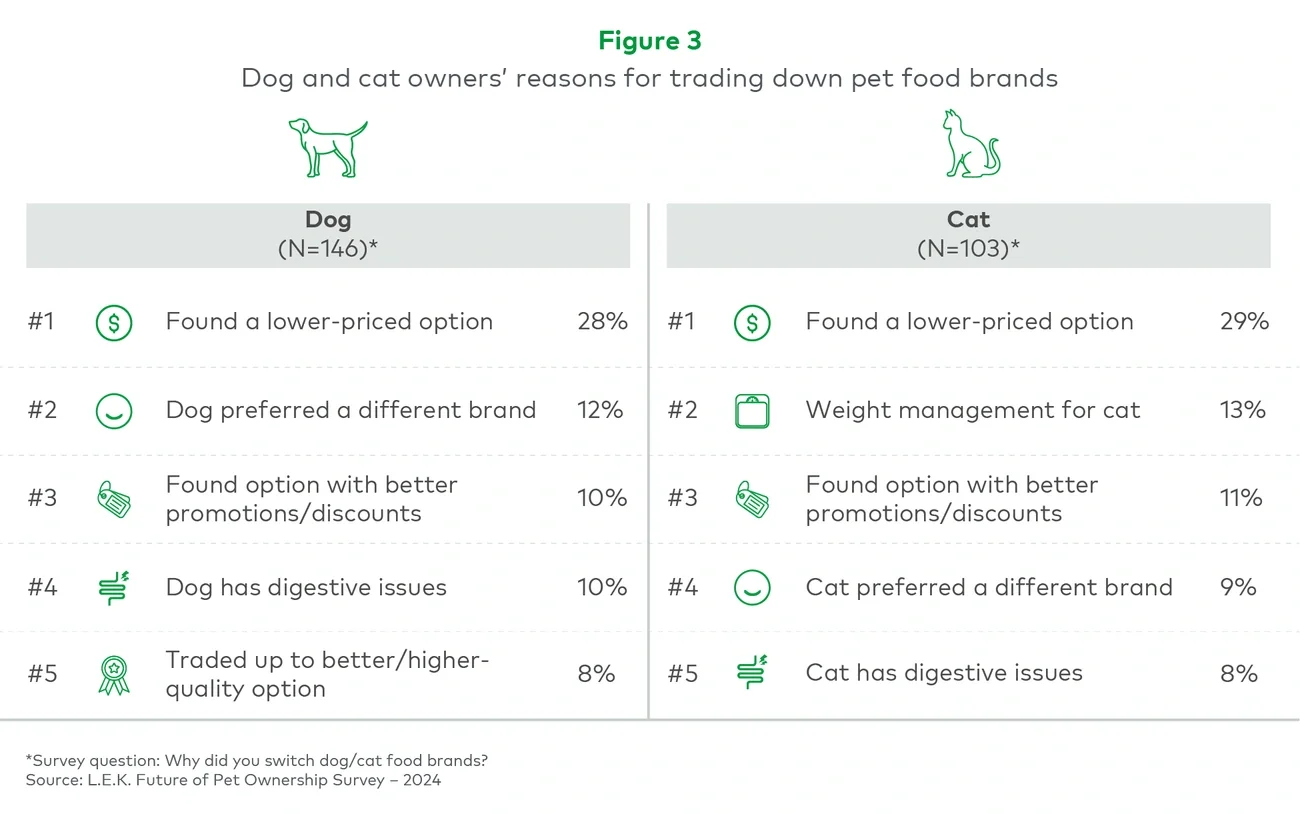
Unsurprisingly, cost was the primary motivation for trading down. About 40% of respondents trading down said they did so because they found a lower-priced option or better promotions and discounts (see Figure 3). 

Image
Dog and cat owners’ reasons for trading down pet food brands
Image
Dog and cat owners’ reasons for trading down pet food brands

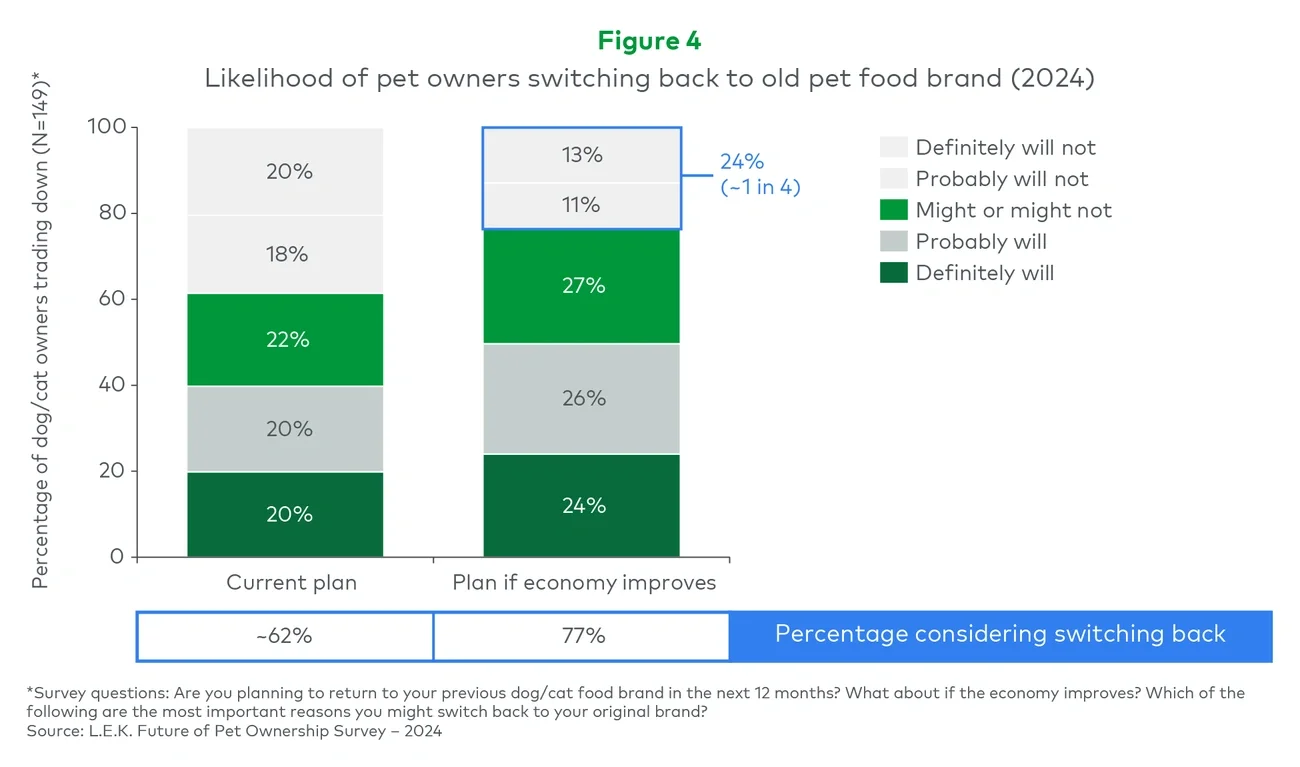
Among consumers who traded down, about 62% were already considering returning to their original brand or price point. Only 1 in 4 said they wouldn’t consider switching back if the economy improved (see Figure 4).

Image
Likelihood of pet owners switching back to old pet food brand (2024)
Image
Likelihood of pet owners switching back to old pet food brand (2024)

A desire to return to superior ingredient quality and proven health benefits were the largest drivers for those who traded down but were considering switching back, emphasizing the need to provide differentiation to win new and lapsed consumers alike.

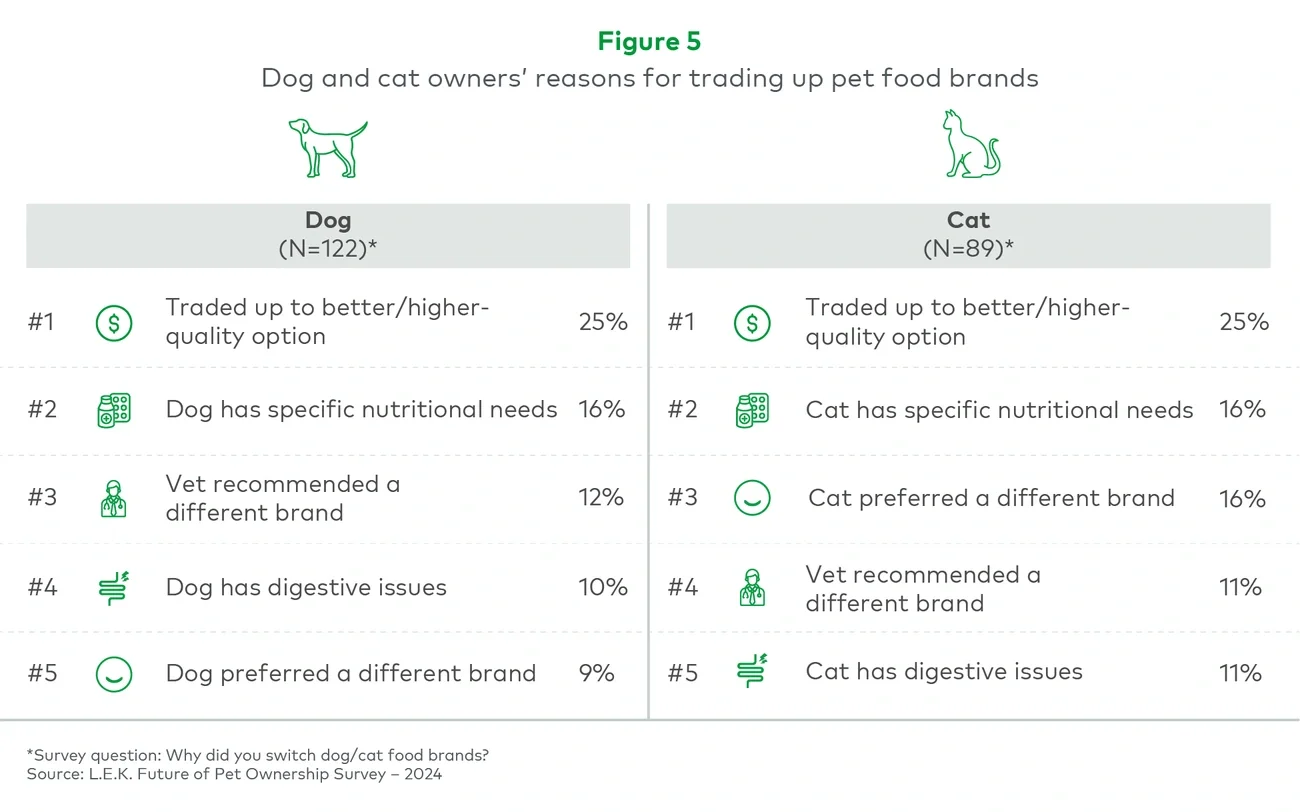
For their part, pet owners who traded up cited a variety of reasons for spending more, such as higher-quality ingredients (25%) and specific nutritional needs (16%). Veterinarian recommendation was another common reason, mentioned by 12% of dog owners and 11% of cat owners (see Figure 5). Pet food brands with clear niches are the relative winners in this segment of consumers.

Image
Dog and cat owners’ reasons for trading up pet food brands
Image
Dog and cat owners’ reasons for trading up pet food brands

Implications for pet food brands

Considering these dynamics, as well as the crowded nature of many companies voicing the same industry health claims and benefits, it’s imperative for pet food brands to clearly understand and articulate their positioning strength and differentiation to consumers.

To continue the conversation and learn how L.E.K. can help, please contact us.

L.E.K. Consulting is a registered trademark of L.E.K. Consulting LLC. All other products and brands mentioned in this document are properties of their respective owners. © 2024 L.E.K. Consulting LLC 

English